Battles with Heart

Something has been bothering me of late, and it has only just come together in my head, so let us talk about it a little.

Possible (minor) Rogue One spoilers (but not really) ahead.

Rogue One is truly the Star Wars movie I’ve wanted for a long while. Despite some weaknesses in the pacing and screenplay, it pressed all the nostalgia buttons and legitimately made me feel like a kid again. The final act is particularly noteworthy in this regard, as the final battle is exciting, emotional, and gripping. Even though the ultimate outcome is already known, the journey to the end is well worth it.

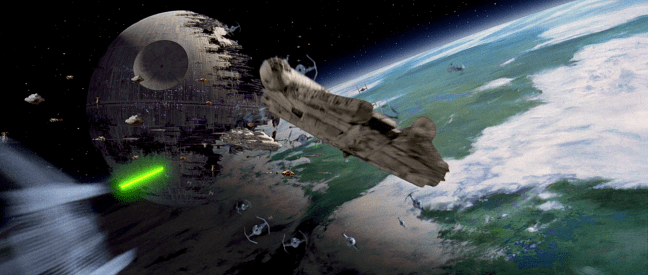
That is when it occurred to me: the Battle of Scarif is the first Star Wars battle since Endor that truly felt like an actual Star Wars battle.  What I could not quite figure out was why.  After all, the prequel trilogy is filled to the brim with fighting and duels. Very often, these battles were the highlights of otherwise incredibly mediocre movies. So what was it about this particular battle that made it better than three movies worth of battles combined?

battle_of_endor

The problem is that the prequels’ battles are merely a backdrop. They are the frame rather than the painting. The Battle of Naboo exists so that WesleyAnakin can do something cool and save the day. The Battle of Coruscant exists so that Anakin and Obi-Wan are not simply flying through empty space to save the chancellor. The battles themselves really are not important, based on how little we see of everything happening around the heroes. The battles are merely a means to get the heroes from point A to point B (in a fashion).

By comparison, the Battle of Yavin, while indeed a coming-of-age test for Luke Skywalker, is also just as much about the Rebellion’s desperate struggle against the overwhelming might of the Empire. Every Rebel pilot shot down in battle impacts the viewer in some way. The battle is not a background element; it is the story, of which Luke is a part. The story of the battle and the story of Luke compliment each other and strengthen each other.

Likewise with the Battle of Endor; we do not only see Lando Calrissian at the helm of the Millennium Falcon. We see rebel pilots like Wedge Antilles fighting overwhelming odds. The movie continually returns to Admiral Ackbar trying to save his fleet from the trap it has fallen into. Not only that, but the preceding two films laid the groundwork for the plight of the Rebel Alliance and the necessity of their cause. The viewer is emotionally attached to the fight, making it that much more intense and exciting.

Now, the Battle of Naboo contains some of these elements, but the problem is that the viewer has no real attachment to the plight of the Naboo. Any sympathy we feel for them is forced upon us by the movie’s framing rather than because there is an inherent goodness to the Naboo. At the very least, there’s nothing redeeming or enjoyable about the villains (after all, Darth Vader and Grand Moff Tarkin were cool), thus leaving the woefully underdeveloped Naboo as the only option.

George Lucas made a critical error when making the prequel trilogy. He thought the plot should be a (political) metaphor, the battles should (only) look cool, and the characters…well, they would work themselves out. It seems that he never once considered that none of these elements could make a movie to which the viewer could attach themselves emotionally. Or perhaps he forgot how to create a movie containing that emotional pull.

rogue-one-rebels-615x242-1-615x242

Emotion is why Star Wars is not merely another summer blockbuster. Emotion is why Star Wars is such a phenomenon that transcends its time. If it were another brain-dead sci-fi flick, it might have a cult following, but nothing like what we see today.

We are pained when Luke’s foster parents are murdered by the Empire, sharing in Luke’s grief. We are elated when the Death Star explodes and a costly battle for the Rebel Alliance turns out to have been worth it. We feel Luke’s shock when his lineage is revealed to him on Bespin. We feel joy when the Empire is finally defeated at Endor, emperor and all. All of these moments mean something because they have captured our hearts.

Rogue One’s greatest strength is the power of emotion and connection. It manages to do what the prequels failed to do, creating a cinematic Star Wars experience that even The Force Awakens fell a bit short on.

Embrace the Contradictions

It’s Wednesday, and you know what that means…

wednesdays
On Wednesdays we post spoilers.

WALKING DEAD COMMENTARY!

Okay, so for everyone who didn’t wimp out after Abraham and Glenn got Lucilled in the season premiere, Congratulations!! You may sit at our table.

fab-evil
I’m offering an olive branch..that’s wrapped in barbed wire.

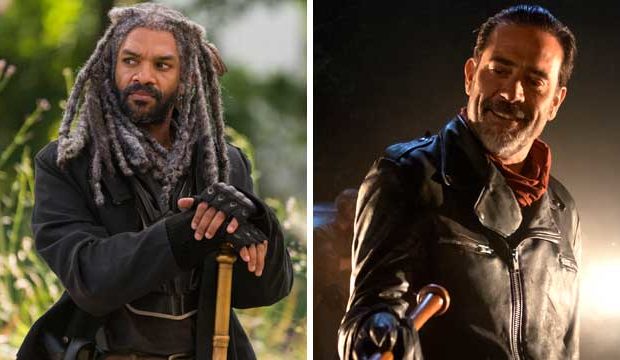
Episode 2, “The Well,” introduces King Ezekiel and The Kingdom, which I suppose is proof that geeks and LARPers can survive the apocalypse.

haters
Become a king. Own a tiger. Be FABULOUS.

Carol wakes up after being unconscious for a couple of days due to her injury, only to find herself in this wonderland of tranquility and goodwill. Morgan takes her to meet King Ezekiel, and she almost forgets to affect her innocent act. You can tell she’s flustered, but little Sally Sunshine soon rises to the occasion and the cookie-baking Carol who fooled the inhabitants of Alexandria is once more ready for action.

punch-face
Oh, Carol, you saucy minx. We love you.

Carol is having none of this peace and plenty, though, and she lets Morgan know that she will not be staying with this group or returning to Alexandria as he had intended.

(By this time, of course, Glenn’s brain matter is decorating the ground and Rick is all crazy-eyes and snot, because Negan broke him. The group at Alexandria could use some good news and reinforcements, but Carol knows none of this and one has to wonder if it wouldn’t just make her more determined to go it alone.) 

Morgan, meanwhile, has taken a young man under his wing at Ezekiel’s request and is teaching him the ways of the Amish Ninja. You get the impression that Morgan is withdrawing his support from the #AllLivesMatter camp and making room for the possibility that some lives will have to end to preserve other lives.

shut-up
Just in time for the Neganpocalypse

It’s good that Morgan is coming to these conclusions before returning to the group, but Carol seems to need some time in the wilderness before she finds her mental balance again. She begins cheerfully and discreetly pilfering items from the residents of the Kingdom, intending to sneak away and shun whatever remnants of civilization are left, but is caught by King Ezekiel.

problem
Your problems don’t seem so bad when you’re eating a juicy pomegranate, now do they?

Zeke is cool, tho. He lets Carol in on his little secret (that he’s not a real king and stuff… total shocker!) and offers her a solution: embrace the contradiction.

He’s well aware that his kingdom exists in stark contrast to the reality of the world around him, and he’s carrying a heavy burden for the people inside his realm, but it’s the dream that makes it all worthwhile. He suggests that Carol can leave, but not, and offers to provide her with the means to go it alone if she so chooses.

feels
Don’t leave us, bae!

What follows is a solution that everyone can live with. Carol is on her own, but not, and Morgan is free to return to Alexandria. They both manage to make an impression on Ezekiel, which is promising given the possibility (necessity?) of an alliance and trade between the Kingdom and Alexandria. I’m hoping Maggie recovers and kicks butt at Hilltop, takes over management of that place, and then they can create a triumvirate with Maggie, Rick, and Ezekiel that would challenge Negan and the Saviors.

All in all, it was a very optimistic episode, in stark contrast to the premiere. It gave me some good feels, and made me hopeful again. I loved the depiction of Negan and Ezekiel as a fan of the comics, and I’m fully on board to embrace the contradictions established by these two dynamic characters. I’m excited to see where this season goes from here!

love
I can’t quit you, The Walking Dead. 


If you want to be part of the conversation about this and other topics, tune in to #NerdRage tonight, 9:30/8:30 central and join us in the live chat. Osei, Ruth, and I will discuss TWD and what the new developments mean for the group. We’ll discuss that other thing I wrote about, and Ruth is working on a post about the sexism of STEM and how photos of nature help ease the triggering, or something. So much nerdery! So much rage! We’d love to see you there!


Stop Blaming Men For Your Failures As A Woman

I recently had a friend ask my opinion of this post entitled, “Why Women Need To Start Asking Men Out…Because Men Have No Balls,” and oh boy….

what-even-face
*fights the urge to slap a mutha*

Where to begin? The most glaring stupidity is the premise of the article; that is, if men are inherently deficient, why would you want to go out with them?

low-self-esteem
Basically, this.

The author (who gave her actual name as if she’s proud of this tripe) then went on a 20+ paragraph rant about how stupid, scared, puerile, and gutless men are.

She laments, “There’s no door-holding, no hand-holding and definitely no free drinks. There’s no taking off hats or courting through invitations. There are no smooth moves, no jackets to dinner. There are no flowers, no tables by candlelight. But, most importantly, there are no dates.” Sounds reasonable, right? I mean you need a date if you’re going to be given flowers and taken to candlelit dinners and hold hands. The drinks aren’t free just because someone else pays for them, but we get the general idea…she’s describing courtship. Right?

Wrong. She then proceeds, “If you’re a single woman, you probably envisioned your twenties as a roaring social scene full of expensive dinners and lavish nights out. You probably thought you’d have a boyfriend, or at least a few dates a week.”

Uhh…at least a few dates a week?? Of expensive dinners? Several dates a week???

budget-bro
You failed math, didn’t you?

She made it a whole paragraph into her post before she begins a diatribe of such epic stupidity that I felt compelled to dissect it.

I’m going to go out on a limb here and suggest that perhaps one reason men in her peer group aren’t spending lavish amounts of money on her is because they don’t have the money to spend. In your 20’s, you’re figuring out life, facing the reality of student debt, trying to establish yourself in a career, and probably living in a sparsely furnished abode with roomies. She obviously thinks a string of Christian Greys are going to vie for the honor of dropping fat stacks on entertaining and feeding her, and that they’ll be polite about it.

christian-grey
50 Shades of Delusion

She writes of the failures of men, “They’ll make eye contact with you in the bar, but never come over. They’ll get your number, but never call. They’ll offer to buy you a drink, but never pay.”

 I don’t know, maybe they’re in the bar to drink and relax, not engage with a millennial harpy.

“They’ll say a girl is hot, but never hit on her. They’ll text you for a week, but never ask you out. They’ll do absolutely everything but make a move.” Apparently they just aren’t doing the hitting on and the making of the moves in the exact manner which you prefer, but they are indeed making moves. You just don’t like their moves.

like-attracts-like
Just saying

She then goes on to complain that men will chase a woman down to get her number, but wait a week to text as if the only possible item on his agenda that week should have been texting her. 

Never fear, though, because M.H. (millennial harpy) has the answer!

“Now, the unfortunate paradox for a woman is that she must be the chased and the chaser. She must be the target and the shooter. She must play coy and simultaneously pursue him.” 

She must complain incessantly and expect lavish dinners several times a week…

“Anyone notice the problem here? Yet again, women are left to do all the work. We’re left playing both sides of the game because they’ve simply forgotten how to play.”

Pretty sure if you’re expecting a man to invest time, energy, and funds into wooing you, calling it a game is a sure-fire way to turn him off. 

keeping-score
Lavish dinners ONLY, you man-child!

M.H. has decided that her dating woes are due to the fact that “…  men don’t know what the hell they want from us….We must tell them what they want if we’re to get anywhere close to the goals we had for ourselves.” 

Yes. Because dating is all about yooouuuuuuu, ladies! I suppose the irony escapes her that she complains about men being weak, indecisive mama’s boys, but her solution is to treat them like weak, indecisive mama’s boys who just need her guidance so that they might make her happy.

I’m curious if she and others like her ever bothered to ask men what they wanted, or if they wanted anything at all. Like my friend Doug said, “[She]  seems to assume that “normal” men SHOULD court, chase after, etc. any woman by virtue of the fact that she is a woman? This is nonsense.” It’s just possible that some men aren’t interested in the chase, and even more likely that they aren’t interested in that particular woman. 

As if her generalizations thus far haven’t been insulting enough, she posits that men are simply cowards; “They’ll never admit it, but you scare the hell out of them. After years of social conditioning, we’ve been duped into thinking that men are the strong ones…TV lied to you. Men aren’t these masculine displays of strength and perseverance. They aren’t these persistent characters..”

chandler
Because media and society have been so kind to portray men as pillars of strength.

It’s possible that the prospect of spending time with the author of that piece is frightening, but not because men are cowards… it’s because they’re sane.

M.H. then goes on to regal us with the strength and intelligence of women, and how they are forever putting themselves out there for the good of society. She does this, of course, by denigrating the women who are raising boys into men who have the audacity to actively avoid her company.

We women have to stick together, ya know.

an-idiot
I’m sure that will never bite her in the butt

Perhaps my favorite part of this inane drivel passing for quality writing at Elite Daily is this: “In the society in which we live today, with Gigi Hadid and Miranda Kerr’s Instagrams readily accessible, women have got a lot to compete with…We can dream about Channing Tatum and Chris Pine all we want, but at least women are rational enough to understand that’s just not gonna happen. So we settle for the options we’ve been given and learn to work with what we have.” (emphasis added)

I don’t know why you have such trouble attracting a man, sweetie. It’s a mystery.

picard-no-you-didnt
She’ll settle for a lavish dinner and flowers.

The coup de gras in this misandrist rant is this assertion: “Men also know that if they don’t get up the nerve to ask you out, all they have to do is swipe right on Tinder to skip the date and get right to the good stuff.” 

First, if you are calling sex “the good stuff,” you obviously don’t feel you have much else to offer. Second, unless all these potential suitors are gay, there are other women enabling this behavior. Finally, if what you want are lavish dinners and he’s obviously only in it for sex, WHY DO YOU CARE THAT HE’S NOT PURSUING YOU? It’s simply a matter of wanting different things, and you need to get down off your sanctimonious soapbox about how indecisive men are. They made a decision. They chose not you. 

the-pain
The struggle is so real.

As my friend Ruth said, “Men don’t approach women for dates anymore, because they’ve been yelled and screamed at that women are too empowered to need or want them for more than an F-bomb. And the GOOD men are looking for so much more.” 

Men who are looking for more than no-strings copulation are willing to put effort into a date. They’ll provide flowers and candlelight and the whole nine…but they are not interested in playing games with a whiny little diva who wants to use them for their pocketbook before she decides to settle for not-Channing-Tatum. If you want to attract quality, you have to be quality.

buy-me-things
There are always rich, lecherous septuagenarians if being a decent human being proves too arduous. 

It’s true that society has supplanted courtship with hook-up culture, but it’s hardly singularly the fault of men. It’s also true that, like it or not, sometimes he’s just not that into you.

big-old-mess
You can always just treat yourself to dinner.

Sex, Love, and Porn

Porn is Everywhere

Last Wednesday on Nerd Rage, we discussed sexuality and pornography. Or, more to the point, Shannon and Ruth did while I sat there trying not to have a coughing fit. This was something of an odd conversation for me to sit out, however, due to my own personal issues.

Though I talk about this rarely, I have problems with pornography.

Honestly, this does not feel like much of an admission any more. In a world where people openly declare their love of porn and their fetishes and their kinks, talking about porn like it was something to be ashamed of seems odd. Strange though it may sound to those of you who have never touched, nor even considered touching, porn, it feels unusual to be ashamed of such a thing.

Sex is so ubiquitous in our culture, we hardly think twice when we see it. The idea that anyone should feel wrong for looking at or enjoying sexualized imagery is peculiar because sexuality is so common. The very first episode of Marvel’s Luke Cage shows Luke and Misty getting it on. For three awkward minutes, the viewer is treated to kissing, stripping, and groping (lots of gratuitous groping). And while that is all that is shown, the scene is so dominant as to be out of place in the rest of the episode and first act of the season.

Or take another show, one of my favorites, Suits.  In the second season, the hero, Mike, finally gets together with the cute and whip-smart paralegal, Rachel. As is usually the course in modern media, the first thing they do is have sex. At the law firm they work at. Inside of the file room. And, not only do they have sex, but they go all the way. The whole  act is depicted from start to finish (albeit not explicitly). However, all it would have taken was a few more lost pieces of clothing and a few less discrete camera shots and it would have looked no different to regular porn.

Yes, regular, because make no mistake, that scene, and thousands of others like it, are porn. They may not draw FCC lawsuits nor will they draw a lot of views on PornHub (though they are probably uploaded there too), but they are porn. They exist to titillate, to excite, to bring the brain to think of sex outside of a healthy context. They are everywhere. And when you are a kid, the images get imprinted on you and, at some point, you are going to want to see more.

Porn’s Power

Usually it starts out small. Maybe a sexy advertisement that caught your eye. Maybe a lad’s magazine left lying out or sitting in a rack in the shop. Maybe even a website, where one mis-click sent you to a page filled with images you did not expect. It rightly does not matter what it was. What matters is that you were exposed and went looking for more, to turn that first flicker of a feeling into something big.

When porn first blossoms into that flame, it is a rush. Your eyes and mind are filled with images that you not only have not experienced before, but probably should not be experiencing. It is a bombardment that saturates your mind and fills you with its perverse sense of pleasure. The glow of that flame consumes you…for a time.

At some point, the fire will lose its intensity, its strength. The fuel that made it will burn away, but you remember the feeling. You remember the excitement, the euphoria it brought you. You want more.

You seek more.

You find more.

The first few times, it might be more of the same. What you viewed before or something similar. Eventually, however, you get used to it. You become desensitized to it. It is no longer more that you need: it is different.

Thus begins the spiral of addiction and dependence. What starts as a foray into lingerie catalogs or the “artistic” nude slowly extends itself into deeper corners. Eventually, bodies are not enough. Soon, still images are not enough. At some point, normal sex is not enough. For some, this goes far, far beyond the bounds of the “decent” and the “acceptable.” Mercifully, it has not for me. For millions of others, however….

Porn and People

Porn consumption is commonly treated as perfectly healthy and normal behavior. Humans are sexual creatures, after all, and have we not spent far too long constrained under the thumb of restrictive, outmoded moral codes? We need outlets, places where we can enjoy sex as much as we want, when we want, in whatever way we want. If it means we spend an hour or two a day watching sex on a computer screen, what does it matter?

Sex may be the subject of porn, but sex does not occur in a vacuum. In order for sex to happen, it requires one very vital thing: people. It is not just sex that you watch in porn; it is people. It does not matter if it is a single woman, man, a couple, any combination or multiplication thereof, porn requires people.

The problem is that those people are not really people, not as far as porn is concerned. In porn, those people are just big breasts, a hot body, or a nice…er, endowment. The value of a performer is not in the parts that really matter: the mind, the personality, the heart. Their value lies solely on the body. They are a piece of meat hanging in a butcher’s shop. After all, no one who watched porn has ever looked at an actress and wondered how well she can perform calculus in her head.

Day after day, we parade these images before our eyes. Maybe at first we see people, in the same way you notice someone out of the corner of your eye. But over time, we stop seeing the person. We only see the bodies. We only see the sex. We consume porn like a frat boy consumes beer. He does not stop to savor the drink, or even realize that it is cheap swill, he only wants more because he knows it better and it is “fun.” We are deadened to the person on the screen; they are only there for our pleasure. Cheap whores to be used, abused, and cast aside twenty minutes later.

Performing in porn is considered to be empowering, a way to take charge in one’s life. This is bollocks. Sex unbound does not give strength; it takes it away. Without emotion, without heart, sex turns you into someone else’s plaything. They do not care about your feelings, nor do they care about your future. The fans do not care about a person; they care about a body.

Yet, more and more people, particularly young women, get into the porn business. Not through seedy studios in back alleys, where they will be abused and forced into acts that will break them mentally. Now, they are getting into the business through the use of webcams and a bit of spare time. Young people are now willingly and gleefully throwing themselves into the business of debauchery. They get attention and fame and a following and all they have to do is expose themselves to perfect strangers from the safety of their own homes.

Porn Kills Love

It is the tagline of fightthenewdrug.org, a website committed to battling pornography’s influence. But how exactly does porn kill love? What is it exactly that prevents porn from co-existing with love?

The question is, what is the relationship between sex and love? Of course, it seems that there is no relationship between the two these days. Sex comes first, second, third, early, late, whenever, with love only being a secondary thing you might find if you bang enough people.

This is wrong though, is it not? Sex is more than just physical contact, more than just animal pleasure; it is a bond. It connects people in ways beyond what more platonic contact would. Love is an integral part of sex, in part because the latter reinforces the former.  Without the former, sex flails about, trying to find a true connection where there is none.

When sex is treated merely as a thing, the mind is still looking for a connection. Even if we deny it to ourselves, no matter how much we want to tell ourselves sex is merely animal instinct, it is something deeper in humans.

This is where porn comes in, because porn is the pinnacle of loveless sex. Not only are the people in porn committing loveless sex, the viewer is joining in vicariously. But that desire for a connection remains. Porn cannot provide that connection, but provides a shadow of it. This shadow is part of what keeps the viewer looking for more, this vain, subconscious hope that this can fulfill us.

The deeper you go, however, the more your mind becomes skewed. Love and sex become blurred, as does the purpose of each. Porn rewrites our priorities. We start seeing the sexual act as the goal and our aim is to reach that point. The people we love become objects of pleasure and satisfaction: our pleasure and satisfaction. We become so immersed in porn that we forget the person and only see the body. We begin to objectify those who we love, treating them as possessions to be abused rather than adored.

Sex becomes an all-consuming vice. Where love would give it focus and contain it, porn turns it into a monster. Sating our lust becomes our goal and lust, on its own, is never sated. There is always a new experience, a new conquest., another high. Porn kills love because all the focus is on the sex and not on the human being beside us.


This was hard to write. One of the things that porn does to you, should it get its hooks into you, is drag you into a sense of normalcy. Porn becomes habit and, thus, becomes natural. This post was difficult because I had to keep stepping back and looking into the truths of the habits I have formed. I had to look at my own ugliness…and then realize that I am not the only one.

There are millions upon millions of people worldwide who are broken by porn and do not even know it. They live in a world that tells them it is healthy and appropriate and so never realize how far gone they are. Day after day, relationships are torn apart by porn, women and men ruined by its pernicious effects. For millions of others, lives are consumed by loneliness, as people controlled by porn feel no real need to form bonds outside of themselves and their computers.

Porn kills love.

Porn kills decency.

Porn kills honor.

Porn is killing humanity, one click at a time.
Some Observations, Part II

It is that time again where I decide to comment on the things I have seen lately. Given the state of the world, I am not really looking forward to this:

  • Audio has come out of Donald Trump being an uncouth pig. To which I say, “So?” Not because Trump is somehow excused from common decency, but because it is entirely unsurprising. The people who support Trump know he’s like this, so this is in no way surprising or even disappointing. You cannot disappoint people when there was no expectations to fail to meet in the first place. It is disgusting, sure, but I did not vote to hang this albatross around my own neck; I knew that is what he was from the start.
  • If anything, I am more irked by the blatant double standard being applied. Yes, Trump is outrageous and ill-disposed to carry himself with any dignity, but what of his opponent? Hillary Clinton is no paragon of virtue. Last I knew, being a corrupt public servant for one’s entire life is worse than being an asshole. After all, I’m fairly certain that four men dying half a world away ranks as something worse than being a sexist pig. A man can always repent of moral vacuity; the dead cannot be brought back to life.
  • It is funny how every election I have been alive for has been portrayed as the most important election in the history of America. It seems that every four years, the ante is upped and the stakes are more dire than ever before. So it figures that, in the year when these statements may indeed be actually true, I am wholly indifferent to the political process. Let the chips fall where they may; my hope does not lie in Washington any longer.
  • I never really understood the “All Lives Matter” response to “Black Lives Matter.”  There is really nothing in BLM’s name that somehow implies that other lives don’t matter. If anything, my real problem is that there is an assumption contained in Black Lives Matter that black lives do not matter to anyone else. The problem here is that if society at large ignores the problems of the black community, what precisely is the black community doing to solve its own ills? Protesting cops and denigrating white people does nothing to lower the crime rate or lift the ghetto out of poverty. Black Lives Matter feels more like a massive deflection away from issues that can only be fixed by looking inward.
  • Do your best to appreciate the people in your life and to strengthen the bonds with them. The myth of human progress is in full effect, and very soon the ideal will be shattered…again. Who knows how the world will look in half a decade? I’m not banking on “better.” In that day, allies and friends will be more valuable than ever.
  • I still don’t understand Harambe memes.

The Siege Mentality

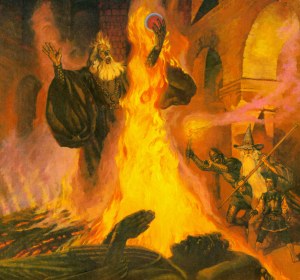
In J.R.R. Tolkien’s  “The Return of the King,” Steward Denethor II is the leader of Gondor. He is described as a mighty and valorous man, like the kings of old. However, at the end of things, as the forces of Mordor threaten to destroy Minas Tirith, he gives into despair and attempts to kill himself and his remaining son Faramir upon a funeral pyre. It is only due to Pippin and Gandalf’s intervention that Faramir is saved, but the Steward himself is lost.denethors-pyre

To understand this, we have to go back before this, when we find out that Denethor has in fact been contending with Sauron in a battle of wills…and losing. The reason Denethor despaired at all was the fact that, through the Palantir, Sauron showed only that which the Dark Lord wished the Steward to see.

Denethor’s mind was filled with foul and frightening images.  Thousands upon thousands of orcs amassed on the plains of Gorgoroth. Mighty trolls marching out of the Mountains of Shadow. The vengeful men of the east and south, atop chariots and Mumakil, ready to lay the men of the west low. He was strong enough to resist these images, however. While he was prematurely aged by his battles with Sauron, he remained strong in the face of the deadliest of foes.

That said, it is safe to say that Denethor’s will was slowly eroded by that which Sauron showed him. His mind was slowly given over to the idea that Sauron’s forces were too great for him to overcome. He felt besieged long before the armies of Mordor ever left the Morannon or Minas Morgul. He was brave and valorous, to be certain, but still just a man, and men were ever inclined to fear. And fear for his own flesh and blood, for his only surviving son and heir, is what tipped him over the edge.

He only saw the images that were worthy of his fear and in the end they were his undoing.

It seems like the modern era is not much different.

Only today, Sauron is not the foe in question, but rather it is the media. The media which jumps on every single story where a black man is shot by police officers. It matters not what the circumstances are, only that the black community sees another “attack” on them. Time and time again, another story is brought up, portraying the black man as the innocent victim and the officer(s) as the relentless executioner.

And so, thanks to the media, the black community is much like Denethor was: afraid and besieged. The police are no more inclined to shoot black men as men of any other race, but the media shows us only those images which reinforce their narrative. Whereas the orcs of Mordor were a real and malicious threat, the police are being twisted to look like orcs, instead of our fellow citizens. The black community is being trained to see a villain where there is none.

If only we could come out of our chambers for but a minute, tear our eyes away from the Palantir that shows us nothing but grief and horror, and see the grander picture. Yes, there is true danger and corruption in the world, danger which ought to be rooted out. But this is not the whole story. It is not the whole of the reality.

Denethor saw the relentless armies of orcs arrayed before him, but what the Palantir blinded him to was the gleaming ranks of the men of Gondor. It is true that his home was threatened, but if he could raise his head up for but a minute, he would have seen that all was not lost, that valorous men would still fight to stem the tide of darkness. He would have seen that all hope was not lost; that if a single hobbit could have enough courage to swear fealty to him, then surely men twice that size could find it within them to fight back as well.

And so the black community must do the same. They must look away from their own Palantir and look to their own communities. They must reject the images that are impressed into them and see the world for what it really is, that the siege is really no siege at all. They must not burn themselves on their own pyre, but realize that, if they look beyond the here and now, there really is a world worth fighting for, and their enemies are not nearly as numerous as they think.

Apathy is Death

korribanThe funny thing about places strong in the Force is that you start to see things.  Hear things…things that you ought to hear, but may not want to.  So it was on the Sith tomb world of Korriban as I traveled through the decrepit ruins of a temple.  Along the way I was confronted by my companions, each in turn, presenting me with a choice.  And each time, I answered in a way that attempted to cut down the middle, appease everyone without taking a stand.


And at the very end, they each judged me alike, admonishing me.  “Apathy is death.” echoed in the room, through my mind.  “Apathy is death” would be the words to follow me in my journey and my search, subtly affecting all my actions.

Now, if you are in any way paying attention, I am obviously not talking about my own personal journey.  Rather, this happens to the Jedi Exile in Knights of the Old Republic II.  In a more complete game, “Apathy is death” might have been addressed more clearly, however, this does not mean it is not an important life lesson.

Lately, this article has been floating around. To summarize, it is a baffled look at the tendency of millennials to think that not knowing how to be a functional adult, at the most basic level, is somehow a positive thing. They think that being incompetent or lazy is cute or desirable. This is, of course, inane and foolish.

However, it occurred to me that there is something far worse happening with today’s youth, which goes beyond mere narcissism: Apathy.

Millennials are not just being lazy when they let the laundry pile up in the corner. They do not just think it is cute when they order take out every day of the week because they hardly know how to cook. It is not just them thinking it quirky when they cannot manage their money.

It is apathy.

They simply have no desire to actually be functional adults.  The will to be respectable, capable, and dependable does not exist within them. Millennials simply do not care.

Now we see the results daily. The young adults who meander through life without any real or serious goals: apathy toward the future. They do not get their lives in order because they have no real desire to actually get their lives in order. The future is far away and nothing to worry about.

The college students who demand safe spaces on college campuses: apathy towards different opinions. Sure, they have intense, angry reactions to opinions with which they disagree. However, in the end, their true reason for seeking safety from disagreement is that they simply don’t care about opinions different from theirs. It is much easier to not care at all.

The people who attach themselves to every half-baked social justice cause cooked up on the internet: apathy towards making a real difference.  It is easy to make a lot of noise on the internet. It is easy to yell obscenities at cops during a protest. It is easy to call people you have never met bigots and xenophobes. What is hard is to actually change these things, to do something meaningful which might actually have an impact on the world. One can watch from the sidelines, saying “This is awful/great” while excusing oneself by saying “This is far from me” or “It cannot touch me here, in my little bubble.”

Life on this Earth invariably trends downward: we all get older, that which was once new atrophies. To spend your life doing nothing with yourself because you are indifferent won’t stop death from arriving.  Apathy is death because inaction inevitably means that you build nothing up. You can do nothing good, nor can you prevent bad from happening.

Apathy is the worst kind of death; the death of a life lived to its smallest, of potential thoroughly wasted. And an entire generation has grown up apathetic to life itself.

15 Years

Fifteen years is a long, long time.

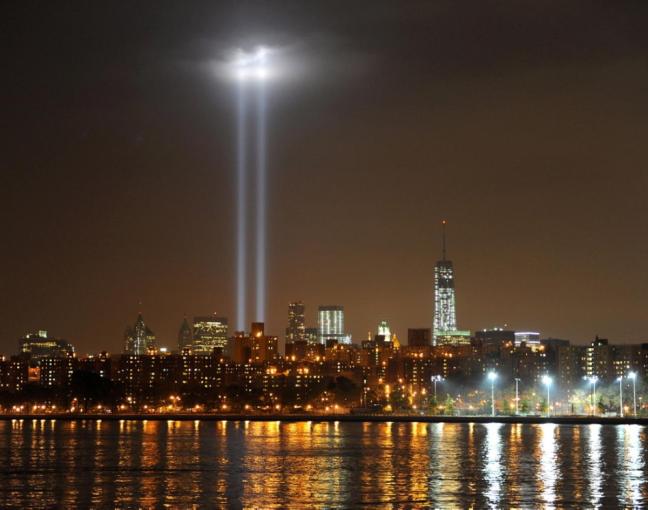
Fifteen years ago, I was still in school. I was still just a kid, for whom college and adulthood were but a distant worry, nothing to be concerned about.  Politics was just one of those things I saw on Sunday morning talk shows. The world was still full of dreams and the future was bright.

That morning, I was in social studies, doing an activity of some sort; I hardly remember what it is and it wasn’t important in the long run.  That’s when the announcement came over the PA, instructing teachers not to turn on their televisions.  Naturally, this was the dumbest thing administration could have done, because within seconds, ours was on to ABC, and the images of the burning towers.  We weren’t sure what was happening, as pretty much everyone else in the world was at that moment, so we tried to get on with it, casting hesitant glances at the news.  Twenty minutes later, the signal was cut.

I’ve always been conflicted on that decision.  On the one hand, I could understand.  In a school of ~1500 students, many of whom had parents working in and around New York City, there is good reason to try and restrain fear.  On the other hand, we were blind for the rest of the day.  We knew planes had hit and the towers burned, but we learned nothing more until after school.

That was when I learned the horrible truth.  The towers had fallen.  All of the World Trade Center was gone, buried under a pile of twisted metal and dust and ash. The Pentagon had been hit as well as a crashed plane in my own state.  I heard the possible death tolls rise over five thousand.  I watched Peter Jennings, a man I had considerable respect for, fail to hold together.

In a world where war was a distant echo from places like Israel and Kosovo, harsh reality exploded into my mind.  It struck in a place that I had visited not even five years before, a place that marked a skyline burned into my memory from childhood.

In an instant, the world had changed.

The myth of human progress: until recently, it was a concept I understood to which could give no name.  The myth asserts the idea that humanity is “progressing.”  It is the idea that the progression of technology and morality will lead to a better, brighter future without war and conflict. The myth first appeared in the early 20th century.  The invention of motorized land and air travel, the proliferation of electricity, the dawn of modern medicine had all led to an atmosphere of the unstoppable force of mankind.

World War I shattered this perception. Humanity’s progress didn’t only make life better; it made it many times easier to end those lives. And so in a crucible of blood and suffering, the myth suffered its first death.

It would not be resurrected again until the end of the century.  With the collapse of the Soviet Union and the dawn of the Information Age, humanity seemed set on the path of uninterrupted progress once again.  And once again, the myth was shattered. Once again, we learned the hard way that not everyone in the world believes in a freer, safer world.

But this time, rather than being changed, people grabbed up the shards and tried to pretend that progress was unabated.  They tried to pretend that the world wasn’t as dangerous as it always had been, the goals of all humanity were aligned together. Those that had taken the attack as a wake-up call were opposed to those who had not.

And so I have watched the world crumble ever since.  Where once there had been unity, the world was slowly consumed by division and hatred. The love borne out of shared grief, love that once brought us together, wasted away. Maybe the terrorists won after all.  Rather than focusing on tearing them apart, we tear each other apart. Now we are divided in every sense of the word, even to the point where we cannot agree there is an enemy to fight at all.

So, on this day, the fifteenth anniversary of the attack that changed everything, my heart is grieved. Not only for the lives lost on the day, but for the world that this day birthed.

Enough With the Political Sanctimony

It’s no secret that the political atmosphere is rife with tension these days. It doesn’t help that both online and in the real world, there are paid trolls who are making bank off the divisiveness of various movements and campaigns. It is mentally and spiritually exhausting to deal with.

I’m simply tired of the political blame games. I’m tired of broad insults and assumptions.

Someone asked me earlier, in discussing ‘deplorables’ and ignorance and support for this side or that, “Who’s fault is that?” You know what I said?

Ours. It’s our fault.

It’s my fault and your fault. It’s everyone making sweeping assumptions and dispensing broad insults and NOT talking to the people around us in real life about the whys and hows of real life issues. We aren’t even aware of what issues matter most to the people living around us, working with us, and teaching our kids, or why those issues matter to them.

Seriously.

I think we need to step away from the internet and relearn how to speak to actual human beings. We need to be able to discuss, educate, and persuade without being complete asshats, because that’s pretty much how we all come across when all we do is obsess over who’s on the right side of politics all day online. We spend an inordinate amount of time arguing with people whose opinions we don’t esteem in the least, and whose lives we couldn’t care less about. And why don’t we care??

If you can’t see your opponent as a human being with value simply because they vote differently than you, then I’d say that says a lot more about you than it does about them. I certainly don’t like what it says about me, and as convinced as I am of my rightness, I realize that it makes no difference when I crow about it on the internet. That usually doesn’t change anyone’s mind, but it validates my opinion with every like and “Amen!” thrown my way…which is still pretty unproductive.

Being morally superior about our choice in candidate does far more harm than good. I can and will express my opinions, but I’m trying to avoid issuing insults to people I don’t even know. People whose lives, concerns, and values I can’t possibly understand. I know that their support may go to policies and candidates that I find detestable, but why should I then write them off as if they’re no better than dirt? Not knowing what led them to this choice, what good does it do to insult them now that they’ve reached it?

Basic decency has taken a critical hit in this election cycle. Even good people are so caught up in the frustration of it that they’re letting their pride and ego turn them into something unrecognizable. I get it, we’re all extremely frustrated! We’re all disappointed and disgusted and afraid. But we’re also all still human beings, and we’re more complex than “Trump voter” or “Hillary voter” or “Johnson voter”. We’re all far more complex than political affiliation. Our importance and worth extends beyond “ally” or “opponent”.

You may be right. You may have the most facts and the best arguments. You may have a brain the size of Canada.

But if you don’t have a heart, you’ve lost. It’s just that simple.

You’ve lost your ability to influence people who you will need on your side politically, and you’ve lost a crucial part of what it takes to be a decent person in general.

There’s a saying that goes like this: “You can be right or you can be happy.” Just look around you. Look in the mirror. It’s pretty clear that we aren’t choosing happy, and frankly I don’t wish to be allied with a bunch of sourpusses.

I simply cannot retain the good in me when my mind and mood is being poisoned by negative influences. I choose to be happy, and to be at peace.


Romans 12


14 Bless those who persecute you; bless and do not curse. 15 Rejoice with those who rejoice, and weep with those who weep. 16 Be of the same mind toward one another. Do not set your mind on high things, but associate with the humble. Do not be wise in your own opinion.

17 Repay no one evil for evil. Have regard for good things in the sight of all men. 18 If it is possible, as much as depends on you, live peaceably with all men. 19 Beloved, do not avenge yourselves, but rather give place to wrath; for it is written, “Vengeance is Mine, I will repay,”says the Lord.


Bias and Empathy

Everyone has inherent bias.

In any number of ways and on various topics, we have a preconceived and prejudiced view of the world. We can’t help it; our perceptions are shaped by our own experiences. We can no more gain experience by listening to someone else than we can gain height by standing next to an NBA player. We may be able to gain understanding, but we cannot feel or think any differently unless we process other perceptions through the lens of our own known experiences. This is called gaining empathy.

The dialogue I see every day concerning societal ills (specifically for this post, racism and sexism) is simply unhelpful. We have foregone compassion to pursue some kind of experiential competition, a jockeying of anecdotes, if you will. I have been told I know nothing of racism because I’m white, or that I must have internalized misogyny because I care about a man’s voice in an abortion debate. I’ve even seen the argument that I cannot speak with any authority on race because I’m blonde. It is largely accepted in our society that some experiences and opinions hold more weight simply because they fit a certain narrative.

I don’t have to be black to know what racism is, I have experienced it first hand, and quite forcefully. I have no “privilege” that protects me from hate, because hate is a spiritual ill. It isn’t choosy about who it infects. To be told that my experience is less valid or that my opinion less valuable based on my race is in itself racist. To be told that I must always side with a woman in a debate over sexism is perpetuating sexism. These narrow parameters we insist on are limiting not only our dialogue but also our understanding. We are propagating the very things we claim to want to abolish by telling others they aren’t qualified to speak because they don’t fit our idea of a victim.

There is no way for someone else to know our experiences, or how those experiences affect us. The only thing they can do is empathize by relating to us through an experience of their own. I have never lost a child. I imagine it is unbearably painful, and my empathy for those who’ve lost a child is based on my experience of knowing love as a mother and of losing a nephew. That loss devastated me, but I know my love and my loss was less than that of his own mother, because I know that my love for my own children is greater than anything else I’ve ever known, including my love for other family members. It’s simply different. I can, however, relate based on my own experience. I can empathize. I can understand a little better because my experience is a little closer. I cannot know, however.

Likewise, when someone speaks to me of prejudice and oppression, I can relate through my own experience. When they tell me that the vehicle by which I come to relate to them is invalid, unwanted, and disrespected, they are essentially saying they do not want my understanding; they want my complete submission to their thought control. They wish to implant ideas and feelings that are untethered in either experience or reality. They don’t want me to relate, they want me to substitute my thoughts for theirs. This does not lend itself to realizing empathy, but it is pretty successful as a bullying tactic.

We used to be taught the Golden Rule: “Do unto others as you would have them do unto you”, or “Treat others how you’d like to be treated.” This valuable lesson has been twisted and now people will say, “Treat others how they treat you.” You’ve been hated? Hate others. You’ve been oppressed? Oppress others. You’ve been objectified? Objectify others. This ideology is poison. There is no empathy or compassion to be found in it, only cruel one-upmanship and tyranny. This hardness of heart is what we perpetuate when we try to shut others up and devalue their experiences by which they can relate to and understand us. Empathy and understanding are fostered in the shared experience. When we begin to relate instead of compete, we can have constructive dialogue.

Of course, our anecdotes and experiences may still be askew of absolute truth, but they are valuable in establishing a healthy consideration for others via the Golden Rule. Facts (via FBI crime data/statistics) absolutely undermine the rhetoric of the Black Lives Matter movement, but facts do not do nearly as much damage as their expressed disdain for police officers and their disregard for other races in general. Even the most altruistic among them cannot overcome the divide that has been deepened by the inability to value opinions outside of their own. It is much the same with modern feminists. The rampant misandry within feminism today has poisoned all conversation concerning sexism. They do not want to foster understanding, but to obliterate and subvert all opposition to their particular worldview.

It’s important to realize that we all have our own biases. We can’t help how our experiences have shaped our perceptions, but we also cannot force other people to embrace our biases. We have to get over ourselves if we wish to connect, and we have to find shared ground in order to truly foster understanding. We have to return to a philosophy of empathy which says “I do not want this to be done to me, so I must not do this to you.”